Luxury vegan perfumes combine elegance with ethical practices, offering high-end fragrances free from animal-derived ingredients or testing. Of the houses on this list, Scento sells Le Labo, for example Santal 33, as 2, 5 and 8 ml decants, so you can test it before buying a full bottle. These brands use advanced synthetic alternatives and sustainable methods to replicate the depth and sophistication of traditional perfumes. Here’s an overview of five standout brands:
- Chantecaille: Known for its botanical gardenia-based scent (€195), this brand supports global conservation efforts.
- Le Labo: Offers hand-blended, refillable fragrances like Santal 33 (€189+), emphasizing craftsmanship and eco-conscious habits.
- Auphorie: A Malaysian niche house creating artisanal, plant-based scents like Iris Macchiato (€196 for 15mL).
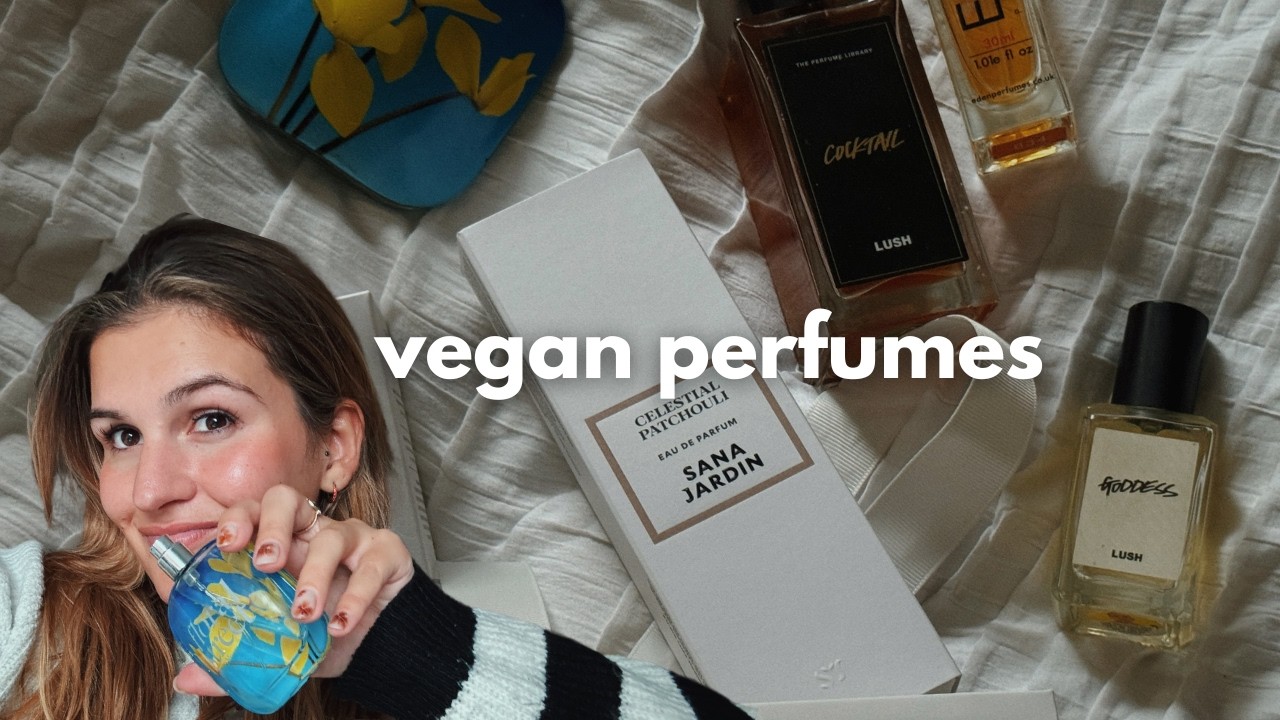
- Lolita Lempicka: Vegan since 2017, featuring whimsical designs like the apple-shaped Le Parfum (€120).
- Sana Jardin: Focused on social impact, with sustainable practices and popular scents like Sandalwood Temple (€124+).
These brands showcase ethical luxury through cruelty-free, vegan formulations and sustainable practices, proving that sophistication and conscience can go hand in hand.
Luxury Vegan Perfume Brands Comparison: Price, Features and Ethics
The short answer: a vegan perfume contains no animal-derived ingredients, while a cruelty-free perfume is not tested on animals. They are two different promises, and the houses in this guide, among them Chantecaille, Auphorie, Lolita Lempicka and Sana Jardin, are known for vegan, cruelty-free formulas. To check any bottle yourself, look for the Vegan Society Trademark or PETA’s Cruelty-Free and Vegan logo rather than relying on words like “natural” or “clean”.
| House | Profile | Scent the guide highlights | What the guide says it stands for |
|---|---|---|---|
| Chantecaille | Luxury French brand | A gardenia-based perfume | Vegan formulas and philanthropic work with endangered animals |
| Auphorie | Niche luxury house from Malaysia | Iris Macchiato, which combines coffee and floral notes | Handmade small batches and donations to charitable organisations |
| Lolita Lempicka | Luxury house, fully vegan since 2017 | Le Parfum, in an apple-shaped bottle | Vegan and cruelty-free formulas, certified by One Voice |
| Sana Jardin | Described as the first socially conscious luxury fragrance house | Sandalwood Temple | Vegan and cruelty-free fragrances with a “Beyond Sustainability” programme |
Further down, the section on what vegan and cruelty-free labels mean explains how to verify a claim, and our guides to vegan versus cruelty-free perfumes and how to choose high-end vegan fragrances go deeper.
One more house in the guide, Le Labo, is known for hand-blended, refillable fragrances such as Santal 33 and Rose 31.
1. Chantecaille
100% Vegan Formulas
Chantecaille, a luxury French brand, has made a name for itself by offering perfume formulas that are entirely vegan. Their fragrances are crafted without any animal-derived ingredients, making them a truly cruelty-free choice for perfume lovers.
Standout Fragrance
One of their most celebrated offerings is a gardenia-based perfume, often described by beauty experts as a “compliment-magnet.” With a price tag of around €195 at upscale retailers like Harrods, this scent combines elegance with the lasting power expected from high-end fragrances.
Ethical and Conservation Efforts
What sets Chantecaille apart is its dedication to ethical practices and global conservation. Harper’s Bazaar highlights this unique aspect:
"As a vegan-friendly company, Chantecaille’s gardenia perfume is a compliment-magnet and by purchasing the sophisticated scent you’ll be supporting the luxury French brand’s wide-ranging philanthropic work with endangered animals too."
This means that every bottle purchased not only delivers a luxurious fragrance experience but also supports efforts to protect endangered species around the world.
2. Le Labo
100% Vegan Formulations
Le Labo stands out for its dedication to vegan and cruelty-free practices. Instead of using animal-derived ingredients, the brand incorporates advanced plant-based and synthetic components such as ambrette seed and Ambroxyde. This approach reflects their commitment to ethical luxury without compromising on quality or sophistication.
Luxury Craftsmanship
Le Labo’s fragrances are a testament to meticulous craftsmanship. Each scent is hand-blended on-site in their boutique "labs", ensuring unparalleled freshness and attention to detail. Adding a personal touch, every bottle comes with a minimalist label that includes the date, location, and even a custom message or the owner’s name. This thoughtful process elevates their products into an intimate, artisanal experience. As the brand eloquently states:
We believe the soul of a fragrance comes from the intention with which it is created and the attention with which it is prepared.
This philosophy is evident in their distinctive and carefully curated scent profiles.
Signature Fragrances
Le Labo has gained acclaim for its unconventional and bold fragrances. Santal 33, a blend of cardamom, iris, and Australian sandalwood, has become a cultural icon, even described by The New York Times as a "status symbol". Another standout, Rose 31, redefines the classic rose by combining rose absolute with spicy cumin and deep woody notes, resulting in a scent that’s unexpectedly bold and virile. Prices for these fragrances range from €189 (1.7 oz) to €998 (16.9 oz).
Sustainability and Ethical Practices
Le Labo pairs its craftsmanship with a strong focus on sustainability. As a certified B Corporation, the brand demonstrates a commitment to meeting rigorous social and environmental standards. They also encourage eco-conscious habits through their refill program, offering a 20% discount when customers return empty bottles for refilling. This initiative not only reduces packaging waste but also aligns with their broader mission to minimize environmental impact.
3. Auphorie
100% Vegan Formulations
Auphorie, a niche luxury perfume house from Malaysia, creates its fragrances without using any animal-derived ingredients. Instead of traditional fixatives like musk, civet, or ambergris, the brand relies on plant-based and synthetic alternatives. This ensures that every bottle adheres to strict vegan principles while maintaining the complexity and depth expected in high-end fragrances.
Luxury Craftsmanship
Every Auphorie fragrance is made by hand in small batches in Malaysia, using rare natural extracts alongside innovative raw materials. The brand’s "East-meets-West" philosophy blends heritage and modern techniques, resulting in compositions that stand out in the world of perfumery. This meticulous craftsmanship is reflected in its pricing, with a 0.5 oz (15 mL) bottle retailing for about $208.
Signature Fragrances
Auphorie offers a collection of 30 fragrances, each with its own unique appeal. Highlights include Miyako from the OPUS NO 1 collection, the bold and unusual Iris Macchiato, which combines coffee and floral elements, and the newly introduced Mahamayuri from the All-Natural Collection.
Sustainability and Ethical Practices
Auphorie’s dedication to ethical luxury extends beyond its vegan formulations. The brand supports social causes by donating 10% of its monthly profits to carefully chosen charitable organizations, reinforcing its commitment to responsible practices.
4. Lolita Lempicka
100% Vegan Formulations
Lolita Lempicka has been a trailblazer in the luxury fragrance world since 2017, when it transitioned entirely to vegan and cruelty-free formulations. Certified by One Voice, the brand guarantees that neither its ingredients nor its final products are tested on animals. Traditional animal-derived elements like natural musk, civet, castoreum, honey, and beeswax have been replaced with ethical alternatives.
In addition to avoiding animal ingredients, Lolita Lempicka takes a cleaner approach by excluding artificial colors, filters, and endocrine disruptors. This makes their fragrances a safer choice for those seeking products without unnecessary chemical additives.
Luxury Craftsmanship
Lolita Lempicka’s dedication to artistry is exemplified through its collaboration with Master Perfumer Annick Ménardo, who crafted the brand’s iconic Le Parfum. As described by the brand:
Lolita Lempicka worked with Master Perfumer Annick Ménardo to create Le Parfum. She imagined a sensual and gourmet enchantment, like a modern-day fairy tale.
The perfume’s allure is matched by its visual presentation. The apple-shaped bottle, a signature of Lolita Lempicka, pays homage to the brand’s heritage and whimsical charm. Limited edition designs, such as the intricate "Golden Apple & Frog" compact, add an extra layer of luxury. A 3.4 fl oz (100 ml) bottle of Le Parfum is priced at approximately $120.
Signature Fragrances
Lolita Lempicka’s signature scents showcase its creative blending of ingredients. Le Parfum features notes of amarena cherry, anise, violet, licorice, tonka bean, and musk, while Mon Premier combines licorice accord, cherry, anise, violet, praline, and vanilla. These fragrances have earned high praise from customers, with ratings of 4.6/5 and 4.5/5 stars respectively.
Sustainability and Ethical Practices
Lolita Lempicka’s commitment to sustainability further sets it apart. The brand uses FSC-certified packaging to ensure responsible sourcing of materials. Plastic inserts have been removed from gift sets, and its body milk bottles (6.8 fl oz/200 ml) are made from 100% recyclable P.E.T. Smaller tubes (2.5 fl oz/75 ml) are crafted from vegetable-based plastic derived from sugar cane, reflecting a thoughtful approach to reducing environmental impact.
Your Personal Fragrance Expert Awaits
Take our quick scent quiz to discover authentic designer and niche fragrances matched to your taste — explore them as 2ml, 5ml, 8ml & 30ml decants and samples, so you can try each one before committing to a full bottle.
Find Your Scent5. Sana Jardin
100% Vegan Formulations
Sana Jardin stands out as the world’s first socially conscious luxury fragrance house, offering 100% vegan and cruelty-free fragrances. These products meet the rigorous "Clean" standards set by high-end retailers like Credo Beauty and Net-a-Porter. Highlighting the brand’s excellence, Emily Koko, Merchandise Manager at Credo Beauty, remarked:
Sana Jardin fragrances are classics, which is difficult to achieve with the limited palette of natural ingredients most of our assortment uses.
Luxury Craftsmanship
Guided by its "Flower Healing" philosophy, Sana Jardin creates perfumes using ethically sourced natural ingredients known for their restorative qualities. The brand’s dedication to luxury is reflected in its availability at prestigious retailers such as Harrods. In the U.S., Sana Jardin’s Eau de Parfum is priced at approximately $124 for a 1.7 oz (50 ml) bottle and $234 for a 3.4 oz (100 ml) bottle.
Signature Fragrances
The brand’s standout scents include Berber Blonde (bright and uplifting), Sandalwood Temple (calming and grounding), and Air of Aquarius. Among these, Sandalwood Temple earned recognition as Credo Beauty’s second-best-selling fragrance in late 2022. Sana Jardin consistently ranks in the top three for sales at Credo Beauty, cementing its reputation for excellence.
Sustainability and Ethical Practices
Sana Jardin’s "Beyond Sustainability" initiative addresses environmental and social concerns in meaningful ways. For instance, the brand upcycles nearly 900 tons of orange blossom by-product annually into secondary items like candles and sachets. This process supports local women through the Annamaa cooperative, providing them with economic opportunities.
Founder Amy Christiansen emphasizes the brand’s mission to create a net positive impact on both the environment and society. This vision has driven impressive growth, with an 80% year-on-year increase in 2021 and projected sales exceeding $3.9 million for 2022. Additionally, Sana Jardin secured approximately $4.2 million in funding to expand its social impact initiatives. Even the packaging reflects this ethos, featuring perfume caps made from upcycled textile waste bioplastic and boxes crafted from recycled coffee cups.
Brand Comparison
These five luxury vegan perfume brands stand out for their ethical commitments and use of innovative, plant-based ingredients. While all avoid animal-derived components like musk, ambergris, and castoreum, they vary in their approach to luxury, pricing, and sustainable practices.
Chantecaille sits in the premium price range (€195–€350), focusing on botanical formulations and offering a high-end experience. Le Labo, known for its hand-blended, in-store customization, is priced between €70 and €320+, and features a refillable bottle program. Though certified by PETA and Leaping Bunny, its parent company, Estée Lauder, has faced criticism for not fully aligning with cruelty-free principles. Lolita Lempicka, which has withdrawn from mainland China to avoid mandatory animal testing, maintains its vegan certification. Its reformulated "Original" fragrance keeps the essence of the classic scent, with users noting its similarity to the earlier version. Auphorie produces award-winning artisanal fragrances in small batches, while Sana Jardin offers scents priced from €98 to €196+, supporting its "Beyond Sustainability" model that empowers female harvesters through micro-entrepreneurship. Together, these brands showcase a spectrum of pricing and approaches to ethical luxury.
The variation in pricing reflects not just brand positioning but also the differing levels of investment in sustainability and ethical practices. As Baptiste Bouygues, Founder of Ormaie, insightfully notes:
There is something unique about natural ingredients, they have a soul. Their complexity brings a certain profoundness and poetry to a fragrance.
To achieve similar richness, these vegan alternatives often incorporate advanced synthetic elements like Ambroxan. Their commitment to sustainable sourcing and fair trade partnerships helps justify premium pricing while reinforcing their dedication to ethical luxury.
Vegan or Cruelty-Free? What the Labels Mean
Vegan and cruelty-free are often read as the same thing, but they are not interchangeable. A vegan perfume is about what is in the bottle. A cruelty-free perfume is about how it was tested. A house can say one, the other or both, and the certification marks below show which promise has actually been checked.
| Mark | What it covers | Covers vegan? |
|---|---|---|
| Vegan Society Trademark | The product and its ingredients must not involve or have involved any animal product, by-product or derivative, and must not involve testing of any sort on animals | Yes, and no animal testing |
| Leaping Bunny | No animal testing at any stage of product development, from ingredients to formulations to finished products; certified companies recommit every year and stay open to independent audits | No, it speaks only to animal testing |
| PETA cruelty-free and vegan listings | PETA lists companies that do not test on animals, and separately lists vegan companies that do not test on animals; the plain cruelty-free logo means no animal testing, and the product might still contain animal-derived ingredients | Only for the Cruelty-Free and Vegan logo |
Animal-derived ingredients in perfume
PETA’s guide to vegan perfume names the materials that can make a perfume non-vegan:
- Musk comes from the male musk deer, and PETA says taking it requires killing the animal. Synthetic versions are now more common.
- Ambergris forms in the digestive tract of sperm whales and is sometimes expelled and then collected from the ocean; PETA notes that whales were historically hunted for it.
- Civet comes from civet cats and castoreum from beavers.
- Honey and beeswax are made by bees and are used in sweet, warm scents.
PETA also points out that a perfume that lists only “fragrance” can hide hundreds of components, because trade-secret protection means companies are not required to disclose each one. That is why a certification mark tells you more than an ingredient list does.
A four-step check before you buy
- Separate the two claims. A cruelty-free logo alone does not tell you the perfume is free of animal ingredients.
- Look for a vegan mark. The Vegan Society Trademark or PETA’s Cruelty-Free and Vegan logo covers both the ingredients and the testing.
- Search the directory. PETA’s database lets you look up a brand by name before you buy.
- Ask the house. If a perfume carries no mark, ask the brand directly whether the whole formula is free of animal-derived materials, and check its own page for the current answer.
For more brands, see our guide to the best eco-friendly perfume brands and how clean fragrances are changing luxury perfume.
Conclusion
Luxury vegan perfumes demonstrate that ethical practices and premium quality can harmoniously coexist. By leveraging advancements in biotechnology and green chemistry, brands now create bio-identical molecules like Ambroxan, which emulate the richness of traditional animal-derived ingredients. The result? Fragrances that maintain the same level of depth and complexity as their conventional counterparts.
The five brands highlighted here showcase how the fragrance industry is moving beyond simple cruelty-free claims. Whether it’s Sana Jardin’s commitment to supporting female harvesters in Morocco or Le Labo’s refillable bottle initiative, these examples illustrate that sustainability is now woven into the fabric of the luxury experience.
As the FAB Team at Fablstyle puts it:
"The industry is responding with incredible innovation, proving that you can smell opulent, complex, and absolutely divine without sacrificing your morals."
For those seeking a fragrance collection that aligns with both elegance and ethical values, these brands offer a perfect match. To enhance the longevity of your vegan perfume, consider applying a vegan body cream to your pulse points - moisturized skin helps fragrance molecules adhere better than dry skin.
FAQs
How can I verify a perfume is truly vegan and cruelty-free?
To determine if a perfume is vegan and cruelty-free, start by looking for certifications such as PETA or Leaping Bunny on its label or website. Vegan perfumes exclude animal-derived ingredients like musk, honey, or ambergris. On the other hand, cruelty-free perfumes ensure no animal testing is involved at any stage of production. Many reputable brands share detailed ingredient lists and ethical commitments, making it easier to verify their practices. If you’re uncertain, dig into the brand’s background or rely on trusted sources that specialize in verifying such claims.
Do vegan perfumes last as long as traditional luxury perfumes?
Vegan perfumes are just as capable of delivering long-lasting wear as traditional luxury fragrances. Many rely on high-quality synthetic notes specifically crafted for durability. In fact, depending on the formulation, some vegan perfumes might even surpass their counterparts in both longevity and scent performance.
Which of these brands is best to sample before buying a full bottle?
Brands that make samples or mini sizes available are perfect for trying out scents before investing in a full bottle. Floral Street offers convenient mini samples, while retailers such as Nordstrom and Sephora frequently provide free samples at their counters. For those seeking vegan-friendly options, brands like Le Labo and Laboratory Perfumes offer sampling opportunities through select stores or online programs. Exploring fragrances this way - whether by testing them in person or purchasing smaller sizes - helps ensure you discover the scent that truly suits you.
What is a vegan perfume?
A vegan perfume contains no animal-derived ingredients, so no natural musk, ambergris, civet, castoreum, honey or beeswax. The Vegan Society’s standard for its Trademark sets the bar: the product and its ingredients must not involve any animal product, by-product or derivative, and must not involve testing of any sort on animals.
Which animal ingredients are used in perfume?
PETA names musk from the male musk deer, ambergris from sperm whales, civet from civet cats, castoreum from beavers, and honey and beeswax from bees. Synthetic musk is now more common than the natural kind. Because a label that says only “fragrance” can hide many components, a vegan certification mark is the more reliable check.
Is a cruelty-free perfume also vegan?
Not necessarily. PETA explains that a cruelty-free logo means the product was not tested on animals, but it might still contain animal-derived ingredients, and Leaping Bunny certifies only that no animal testing took place at any stage of product development. For both promises at once, look for PETA’s Cruelty-Free and Vegan logo or the Vegan Society Trademark.
How much do luxury vegan perfumes cost?
The prices quoted at the top of this guide run from about €120 for Lolita Lempicka’s Le Parfum to about €196 for Auphorie’s Iris Macchiato in a 15 mL bottle, with Chantecaille’s gardenia perfume at about €195. Prices vary by size and by retailer, so compare the same size before you decide.


